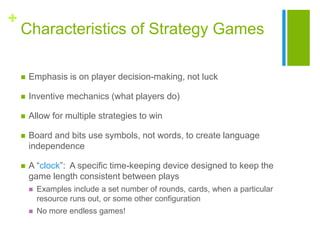
Challenge is the beating heart of the strategy genre. Strip away the challenge, and what remains is little more than an interactive diorama—pleasant to look at, but devoid of the tension that keeps players returning for “just one more turn.” Yet challenge is also one of the most misunderstood concepts in game design. Many players and even some developers conflate difficulty with complexity, or assume that a punishing AI opponent is the only path to a satisfying strategic experience.
In reality, a genuinely challenging strategy game is the product of several interlocking systems working in concert. Understanding these systems reveals why titles like Civilization, StarCraft, and Into the Breach remain compelling years after release.
The Core Pillars of Strategic Challenge
Before examining individual mechanics, it helps to identify the fundamental pillars that make a strategy game demanding. These pillars operate regardless of genre—whether the game unfolds in real time, turn by turn, or somewhere in between.
- Meaningful decisions: Every choice must carry weight, and no option should be universally correct.
- Incomplete information: Players must act without knowing everything about the board state or the opponent’s intentions.
- Resource scarcity: Limits on time, currency, units, or attention force trade-offs.
- Adaptive opposition: Opponents—human or artificial—must respond to the player’s actions rather than following rigid scripts.
- Consequence permanence: Mistakes should linger, creating a narrative of cause and effect.
Remove any one of these pillars, and the challenge begins to erode. A game with abundant resources and no penalties for failure becomes a sandbox. A game with perfect information and no scarcity becomes a puzzle with a single solution.
Why Meaningful Decisions Define Difficulty
The most common misconception about challenge is that it stems from execution. In action games, that is often true—reflexes and precision determine success. Strategy games operate differently. Here, challenge emerges from the quality and quantity of decisions a player must make under pressure.
A decision is meaningful only when it involves a genuine trade-off. Recruiting a powerful unit in XCOM consumes resources that could have funded research or base upgrades. Expanding a city in Civilization accelerates growth but exposes new borders to attack. When every option has a cost, the player cannot simply accumulate advantages; they must choose which advantages matter most.
The Role of Opportunity Cost
Opportunity cost is the engine that drives strategic tension. Designers deliberately constrain resources so that pursuing one goal necessarily means abandoning another. This is why the strongest strategy games rarely allow players to “do everything.” The scarcity is not a limitation—it is the challenge itself.
Decision Density and Cognitive Load
Challenge also scales with decision density. A turn-based game that presents three choices per turn is less demanding than one that presents thirty. However, density alone is not enough. If most decisions are trivial, the player experiences busywork rather than challenge. Effective design ensures that key decisions occur frequently and that their consequences ripple across multiple turns.
| Resource scarcity | Forces trade-offs | Starcraft mineral and gas limits |
| Fog of war | Creates uncertainty | Civilization exploration |
| Permanent consequences | Raises stakes | XCOM soldier death |
| Adaptive AI | Prevents memorization | Total War campaign AI |
Incomplete Information and the Fog of War
Perfect information transforms strategy into calculation. If a player can see the entire board, the optimal move can often be derived mathematically. Challenge disappears the moment the game becomes solvable.
Incomplete information restores uncertainty. Fog of war, hidden unit types, and unpredictable events force players to reason under ambiguity. They must weigh probabilities, hedge against unknown threats, and accept that some decisions will fail through no fault of their own.
This uncertainty is what makes scouting, reconnaissance, and intelligence-gathering meaningful activities. In StarCraft, a single scout sacrificed early can reveal an opponent’s build order, reshaping the entire match. In Civilization, sending a scout into the unknown may uncover a rival civilization—or a barbarian horde.
The Impact of Resource Scarcity
Scarcity is the great equalizer. When resources are plentiful, players accumulate power without friction. When resources are limited, every investment becomes a bet on the future.
Designers employ several forms of scarcity:
The most demanding strategy games combine multiple forms. A player managing a real-time strategy match juggles economy, military, and map control simultaneously—each competing for the same limited attention.
Adaptive Opposition and AI Design
An opponent that never adapts becomes a puzzle to be memorized. An opponent that adapts too aggressively becomes unfair. The sweet spot lies in between: AI that responds intelligently but predictably enough to be countered.
Modern strategy games increasingly use layered AI systems. These systems evaluate the player’s behavior, adjust difficulty dynamically, and introduce new tactics as the match progresses. The goal is not to cheat but to remain competitive without feeling arbitrary.
Human opponents, of course, remain the ultimate challenge. No scripted AI can match the creativity, deception, and unpredictability of a skilled human player. This is why competitive multiplayer scenes sustain strategy games long after their single-player campaigns are exhausted.
Permanent Consequences and Emotional Stakes
When actions carry no lasting consequences, players take risks carelessly. When consequences persist, every decision acquires emotional weight. This is why permadeath mechanics in games like XCOM and Fire Emblem feel so impactful—losing a veteran soldier means losing hours of investment.
Permanence transforms strategy from an optimization exercise into a narrative of triumph and loss. It also raises the cognitive stakes, because players know they cannot simply reload or undo their mistakes.
Conclusion: Challenge as a Deliberate Balance
What makes a strategy game challenging? It is not raw difficulty sliders or punishing mechanics alone. It is the careful orchestration of meaningful decisions, incomplete information, scarcity, adaptive opposition, and lasting consequences. When these elements align, the player is not merely reacting—they are thinking, planning, and committing.
The best strategy games respect their players enough to confront them with genuine uncertainty. They offer no perfect answers, only better and worse bets. That tension—between what is known and unknown, between what is spent and what is gained—is the essence of strategic challenge.
Leave a Reply