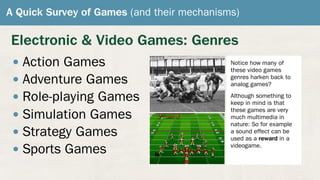
In the vast ecosystem of interactive entertainment, few genres are as frequently confused—or as deeply intertwined—as simulation games and strategy games. Both demand intellectual engagement, both reward careful planning, and both have cultivated dedicated communities that span decades. Yet beneath these surface similarities lies a fundamental divergence in design philosophy, player agency, and emotional payoff. For developers, publishers, and enthusiasts alike, understanding the distinction between these two genres is essential for evaluating game design, marketing positioning, and player expectations.
This article breaks down the core differences between simulation games and strategy games, examines where the genres overlap, and clarifies why conflating the two can lead to misaligned design goals and disappointed audiences.
Defining Simulation Games
Simulation games are built around the faithful modeling of real or hypothetical systems. Their primary purpose is to replicate the behavior, constraints, and emergent outcomes of a system—whether that system is a city, an aircraft, a farm, or an entire ecosystem. The player’s role is less about “winning” in a traditional sense and more about managing, maintaining, and observing the consequences of their decisions within a simulated environment.
Key characteristics of simulation games include:
- System fidelity: The game prioritizes realistic or internally consistent modeling of physics, economics, logistics, or biology.
- Open-ended play: Many simulations lack a defined victory condition, offering instead a sandbox for experimentation.
- Emergent complexity: Outcomes arise from the interaction of multiple systems rather than scripted events.
- Player as operator: The player manipulates variables and observes results rather than commanding units toward conquest.
Examples include Microsoft Flight Simulator, The Sims, Cities: Skylines, and Farming Simulator. Each of these titles emphasizes authenticity of experience over competitive victory.
Defining Strategy Games
Strategy games, by contrast, are structured around decision-making in pursuit of a defined objective—typically victory over an opponent or completion of a scenario. The core loop involves assessing a situation, allocating limited resources, and executing plans that outmaneuver adversaries or overcome obstacles. Strategy games are fundamentally about conflict, whether military, economic, or diplomatic.
Key characteristics of strategy games include:
- Goal orientation: Most strategy games feature clear win conditions, such as defeating an enemy, capturing territory, or achieving a score threshold.
- Opposition: Whether AI or human, an adversary creates tension and forces adaptive thinking.
- Resource management under pressure: Players must balance time, units, and assets against competing demands.
- Player as commander: The player directs forces, economies, or factions toward a strategic end.
Examples include Civilization VI, StarCraft II, Total War: Warhammer, and XCOM 2. Each emphasizes tactical or strategic mastery against a defined challenge.
The Core Philosophical Divide
The most fundamental difference between simulation and strategy games lies in their design intent. Simulation games ask, “What happens if?” Strategy games ask, “How do I win?”
This distinction shapes nearly every design decision. A simulation prioritizes accuracy and depth of systems; a strategy game prioritizes balance, clarity, and competitive viability. A simulation tolerates imbalance because reality is imbalanced; a strategy game often cannot, because fairness is essential to meaningful competition.
Consider Cities: Skylines versus Civilization VI. Both involve managing a growing settlement. In Cities: Skylines, the goal is to build a functional, sustainable city—traffic flow, pollution, and zoning matter for their own sake. In Civilization VI, city management is a means to an end: accumulating advantages to outpace rival civilizations. The same activity serves entirely different purposes.
Overlap and Hybridization
The genres are not mutually exclusive, and many successful titles blend elements of both. Total War combines turn-based strategic conquest with real-time tactical battles that feature simulation-like physics. Stellaris merges grand strategy with deep simulation of empires, economies, and populations. RimWorld operates as a colony simulation with strategic survival elements.
This hybridization is one reason the genres are so often confused. However, identifying which genre a game primarily belongs to comes down to its central loop: is the player primarily managing a system, or primarily competing toward a goal?
Comparison at a Glance
| Primary Goal | Model and manage a system | Achieve victory or objective |
| Win Condition | Often open-ended or absent | Usually defined and measurable |
| Opposition | Environmental or systemic | Active adversaries (AI or human) |
| Player Role | Operator, builder, caretaker | Commander, tactician, decision-maker |
| Design Priority | Fidelity and emergent behavior | Balance and competitive clarity |
| Typical Pace | Slow, observational, sandbox | Variable, often pressure-driven |
| Example Titles | The Sims, Cities: Skylines | Civilization VI, StarCraft II |
Why the Distinction Matters
For developers, misidentifying a game’s genre can lead to flawed design priorities. A simulation that introduces rigid win conditions may frustrate players seeking creative freedom. A strategy game that prioritizes realism over balance may alienate competitive players. Marketing a simulation as a strategy game—or vice versa—sets inaccurate expectations and often results in negative reviews.
For players, understanding the distinction helps in selecting titles that match their preferences. Those who enjoy experimentation, building, and emergent storytelling gravitate toward simulations. Those who thrive on competition, optimization, and tactical problem-solving lean toward strategy games.
Both genres represent some of the most intellectually rewarding experiences in gaming. Recognizing their differences—and celebrating their overlaps—allows developers and players alike to appreciate what each does best.
Conclusion
Simulation games and strategy games share intellectual DNA, but they serve fundamentally different purposes. Simulations model systems for the sake of authenticity and emergent play; strategy games challenge players to outthink opponents toward defined goals. As the industry continues to produce hybrid experiences, the line between the two will blur further. Nevertheless, the core question remains a reliable compass: Is the player here to manage a world, or to conquer one? Answering that question is the first step toward understanding—and designing—games that truly resonate within their intended genre.
Leave a Reply