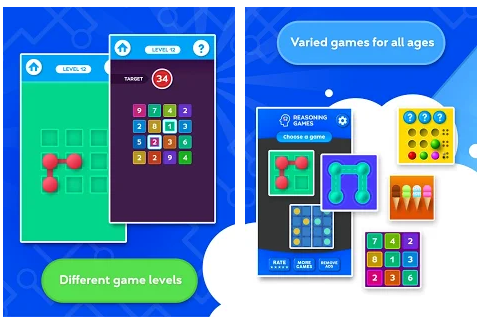
In an era dominated by passive digital consumption, the humble logic game stands as a defiant act of cognitive engagement. For adults and teens alike, these puzzles offer more than mere entertainment; they provide a rigorous workout for the prefrontal cortex, enhancing memory, processing speed, and problem-solving skills. Whether you are looking to sharpen your mind during a commute or seeking a screen-free social activity, the modern landscape of logic gaming offers a sophisticated array of options.
Why Logic Games Matter in the Digital Age
The allure of logic games lies in their universal language. Unlike trivia, which relies on accumulated knowledge, logic games rely on pure reasoning. They demand that players recognize patterns, deduce conclusions from premises, and visualize spatial relationships. For teenagers, these games build critical thinking skills essential for academic success. For adults, they serve as a cognitive shield against mental decline, offering a satisfying dopamine loop that rewards patience and strategy rather than luck.
Classic Pen-and-Paper Logic Puzzles
Before the screen took over, logic was a tactile experience. These classics remain the gold standard for deep, uninterrupted focus.
1. Sudoku
The undisputed king of number placement puzzles. Sudoku requires the player to fill a 9×9 grid with digits so that each column, row, and 3×3 sub-grid contains all digits from 1 to 9. While the rules are simple, the difficulty curve is steep.
- Cognitive Benefit: Enhances short-term memory and trains the brain to spot patterns in chaos.
- Teen Appeal: The instant feedback of a correctly filled grid provides a sense of accomplishment.
2. Nonograms (Picross)
Also known as Griddlers or Picross, these puzzles use numerical clues to reveal a hidden picture. The numbers on the side of the grid indicate how many consecutive filled squares exist in that row or column. It is a battle of deduction that results in pixel art.
- Cognitive Benefit: Boosts visual-spatial reasoning and attention to detail.
- Adult Appeal: The meditative quality of filling in squares is profoundly relaxing.
3. Logic Grid Puzzles
Often found in puzzle magazines, these present a scenario (e.g., five people, five pets, five cities) and a series of clues. The player must use a grid to cross-reference information and deduce the unique solution. It is the purest form of deductive reasoning.
The Digital Frontier: Video Games That Challenge the Mind
The video game industry has evolved beyond twitch reflexes. A robust genre of “puzzle-platformers” and “logic simulators” now targets the intellectually curious.
The Witness
Set on a beautiful, mysterious island, The Witness tasks players with solving line puzzles. However, the game teaches you its language without a single word of tutorial. It is a masterclass in non-verbal communication and environmental logic.
Baba Is You
This indie gem turns logic on its head. The rules of the game are presented as physical blocks that can be pushed around. If you push the block that says “WALL” next to “IS,” and then push “STOP” next to it, you can rewrite the rules of the world. It requires a radical rethinking of cause and effect.
Return of the Obra Dinn
A detective game where you must deduce the fate of every crew member on a ghost ship. Using a magical watch that lets you see the moment of death, you must use logic to identify who everyone is and how they died. It is a triumph of inductive reasoning.
Social Logic: Tabletop Games for Groups
Logic is not always a solitary pursuit. Tabletop gaming has seen a surge in deduction games that pit players against each other.
| Codenames | Word association and team deduction | Parties and large groups |
| Mastermind | Code-breaking via color pegs | Two players, quick sessions |
| Cryptid | Deductive grid searching | Competitive teens and adults |
| Clue (Cluedo) | Classic murder mystery deduction | Family gatherings |
The Psychological Hook: Flow State and Frustration
Why do we subject ourselves to the frustration of a seemingly impossible puzzle? The answer lies in the concept of flow. When a logic puzzle is perfectly calibrated to a player’s skill level, it induces a state of hyper-focus where time melts away. The transition from frustration to epiphany is a powerful emotional release.
For teens, this builds resilience. In a world of instant gratification, logic games teach that struggle is a prerequisite for success. For adults, it provides a controlled environment where problems have definitive solutions—a rare comfort in the ambiguity of real life.
How to Choose the Right Logic Game
Selecting the right game depends on your goal. If you want to improve your working memory, choose a timed game like Set. If you want to improve your patience, choose a large jigsaw or a complex Nonogram. If you want to socialize, choose a deduction game like Werewolf or Secret Hitler.
The Future of Logic Gaming
As technology advances, logic games are becoming more immersive. Virtual Reality (VR) offers spatial logic puzzles that require physical movement, while AI-driven games can dynamically adjust difficulty based on player performance. The genre is not dying; it is mutating into new, more engaging forms.
Ultimately, the best logic game is the one that makes you forget you are learning. Whether you are a teenager looking for a break from social media or an adult seeking a mental sharpener, the world of logic gaming offers a limitless frontier of intellectual adventure.
Leave a Reply