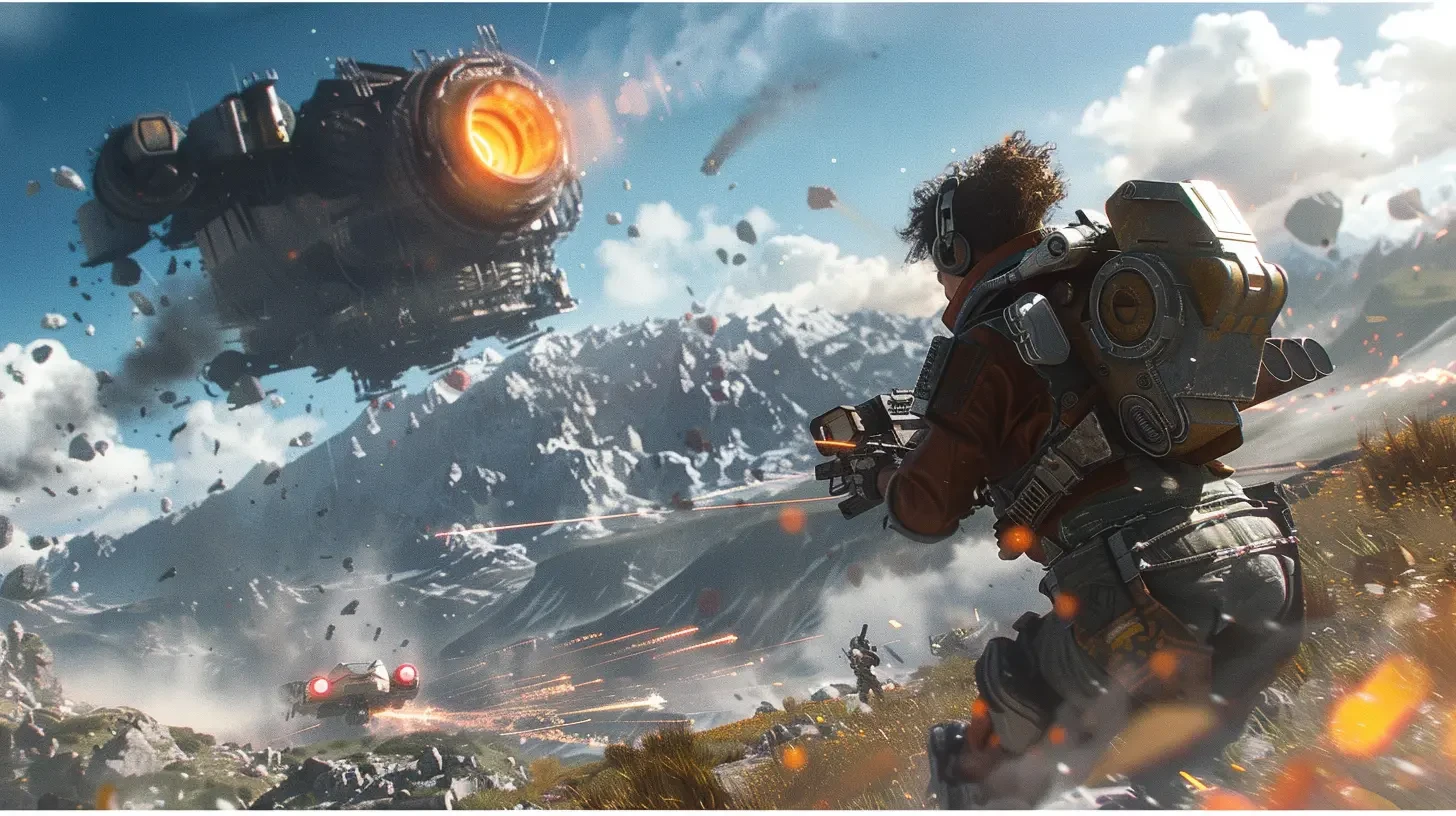
Combat is the heartbeat of the action genre. While visuals, narrative, and level design all contribute to a memorable experience, it is the combat system that determines whether players remain engaged for ten hours or a hundred. The most celebrated action titles share a common trait: they treat combat not as a simple input-to-output transaction, but as a layered conversation between the player, the enemy, and the game engine. In this analysis, we examine what separates exceptional combat mechanics from merely functional ones, and which titles exemplify the craft.
What Defines Exciting Combat Mechanics?
Exciting combat is rarely the product of a single feature. It emerges from the intersection of several design pillars working in concert. When these pillars are well-tuned, the player enters a flow state in which reaction, decision-making, and execution feel seamless.
- Responsiveness: Input latency measured in milliseconds. A dodge that registers instantly, a parry that fires the frame the button is pressed. Responsiveness is the foundation upon which every other mechanic rests.
- Readability: Enemy telegraphs, animation wind-ups, and audio cues must communicate intent clearly. Players should lose fights because of poor decisions, not because an attack was visually ambiguous.
- Depth and Mastery: A low skill floor with a high skill ceiling. Beginners can complete the game, while veterans discover cancel windows, frame-perfect parries, and combo routing.
- Feedback Loops: Hit-stop, controller vibration, particle effects, and layered sound design reinforce every successful strike. Feedback converts mechanics into sensation.
- Risk and Reward: Aggression should carry calculated risk. Systems that reward precise timing with disproportionate damage create tension and incentive.
The Anatomy of a Great Combat System
Beneath the surface of every standout action game lies a structured set of interlocking systems. Understanding these components reveals why certain titles feel transcendent while others feel stiff.
Defense as an Active Verb
The most significant evolution in modern action design is the reclassification of defense from a passive state to an offensive tool. Blocking is no longer a fallback; it is a rhythm. In Sekiro: Shadows Die Twice, the posture system rewards deflecting enemy strikes rather than retreating from them, transforming every encounter into a percussive exchange. Similarly, Bloodborne’s rally mechanic allows players to recover lost health by counterattacking within a brief window, explicitly punishing passivity.
Combo Fluidity and Cancellation
Players derive satisfaction from expression. Systems that permit animation cancellation, aerial juggling, and weapon-switching mid-combo grant authorship over the fight. Devil May Cry 5 remains the gold standard here, offering Style Ranks that escalate based on variety rather than repetition, nudging players toward improvisation.
Enemy Design as a Combat Puzzle
Enemies are not obstacles; they are questions. Each enemy archetype should demand a distinct answer. Armored foes require guard-breaking tools, agile opponents demand tracking, and shielded units force positional play. When enemy variety is paired with encounter composition, combat becomes a tactical exercise rather than a reflex test.
Comparative Breakdown of Exemplary Titles
The following table summarizes how several benchmark titles approach distinct combat dimensions.
| Sekiro: Shadows Die Twice | Posture-based deflection | Shinobi prosthetic tools | Extremely high |
| Devil May Cry 5 | Royal Guard timing | Style-switching and juggling | Extremely high |
| God of War Ragnarök | Parry shield and dodge | Weapon-swap combo chains | High |
| Doom Eternal | Dash and Glory Kill i-frames | Weapon rotation and chainsaw | High |
| Sifu | Environmental awareness | Age-based progression | High |
Why These Systems Endure
Exciting combat mechanics endure because they respect the player’s intelligence and time. They do not obscure failure behind randomness; they make failure instructive. When a player dies in Sekiro or Doom Eternal, the cause is legible. This legibility is what transforms frustration into motivation.
Moreover, the best systems scale with the player. Early encounters teach fundamentals, mid-game encounters test combinations, and late-game encounters demand fluency. This progression curve mirrors effective pedagogy: introduce, reinforce, remix.
Design Principles for Aspiring Developers
For teams building action combat today, several principles hold across genres and budgets:
The Future of Action Combat
The next frontier lies in adaptive systems. Machine learning-driven enemy behavior, physics-based animation, and dynamic difficulty tuning promise combat that responds to individual playstyles in real time. Yet the fundamentals will not change. Responsiveness, readability, depth, feedback, and risk will remain the load-bearing pillars of the genre. Studios that master these fundamentals will continue to define what players expect from action games, while those that chase spectacle without mechanical integrity will produce titles that are forgotten within a single release cycle.
The action genre thrives when combat is treated as a craft rather than a checkbox. The titles discussed here succeed because their creators understood that every frame, every sound, and every input matters. That is the standard to which the industry should hold itself.
Leave a Reply